Two-Column Research Paper
A conference paper with a full-width abstract over a two-column body, a numbered equation, a ruled results table, a footnote and a bracketed reference list.
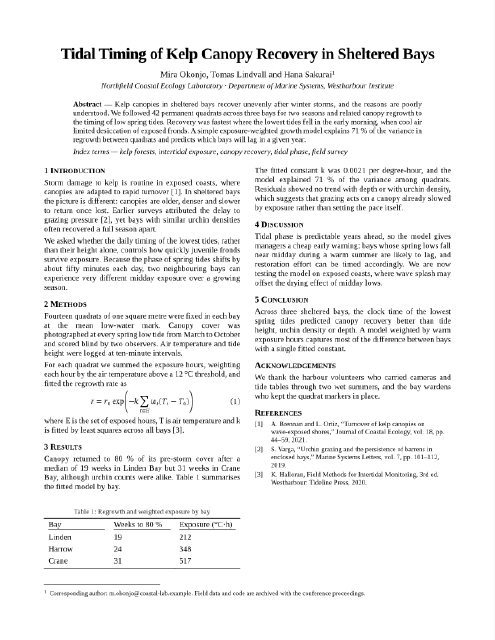
The title block runs across the page; a continuous section break then switches the body to two columns. The model is a display equation with an automatic number, the results sit in a table ruled only above, below and under its header (as journals set them), the corresponding author's address is a real footnote, and the references are a list defined with a "[1]" number format.
Steps
135 commandssteps:
# Spelling marks are an editor overlay; turn them off so the page renders as printed.
- { command: review.proofing, as: proofing }
- { command: design.themeFonts, params: { heading: Tinos, body: Tinos } }
- { command: layout.margins, params: { top: 54, bottom: 54, left: 54, right: 54 } }
- { command: layout.hyphenation, as: hyphenation }
- { command: styles.modify, params: { style: Normal, chr: { size: 10 }, para: { align: justify, spaceBefore: 0, spaceAfter: 3, lineSpacing: { rule: multiple, value: 1.0 } } } }
- { command: styles.modify, params: { style: Title, chr: { size: 20, bold: true, color: { Rgb: [0, 0, 0] } }, para: { align: center, spaceAfter: 8 } } }
- { command: styles.modify, params: { style: Heading 1, chr: { size: 10.5, bold: true, smallCaps: true, color: { Rgb: [0, 0, 0] } }, para: { align: left, spaceBefore: 9, spaceAfter: 3 } } }
- { command: styles.modify, params: { style: Caption, chr: { size: 8.5, italic: false, color: { Rgb: [40, 40, 40] } }, para: { align: center, spaceBefore: 6, spaceAfter: 4 } } }
- { command: styles.modify, params: { style: Footnote Text, chr: { size: 8 } } }
# Paragraph styles for the title block, so no direct formatting carries from one paragraph to the next.
- { command: styles.create, params: { name: Authors, basedOn: Normal } }
- { command: styles.modify, params: { style: Authors, chr: { size: 11 }, para: { align: center, spaceAfter: 2 } } }
- { command: styles.create, params: { name: Affiliation, basedOn: Normal } }
- { command: styles.modify, params: { style: Affiliation, chr: { size: 9.5, italic: true }, para: { align: center, spaceAfter: 12 } } }
- { command: styles.create, params: { name: Abstract, basedOn: Normal } }
- { command: styles.modify, params: { style: Abstract, chr: { size: 9.5 }, para: { align: justify, indentLeft: 36, indentRight: 36, spaceAfter: 4 } } }
- { command: styles.create, params: { name: Reference, basedOn: Normal } }
- { command: styles.modify, params: { style: Reference, chr: { size: 8.5 }, para: { align: left, spaceAfter: 2 } } }
# Title block, full width
- { command: para.style, params: { style: Title } }
- { command: text.insert, params: { text: "Tidal Timing of Kelp Canopy Recovery in Sheltered Bays" } }
- { command: text.newParagraph }
- { command: para.style, params: { style: Authors } }
- { command: text.insert, params: { text: "Mira Okonjo, Tomas Lindvall and Hana Sakurai" } }
- { command: text.newParagraph }
- { command: para.style, params: { style: Affiliation } }
- { command: text.insert, params: { text: "Northfield Coastal Ecology Laboratory · Department of Marine Systems, Westharbour Institute" } }
- { command: text.newParagraph }
- { command: para.style, params: { style: Abstract } }
- { command: text.insert, params: { text: "Abstract — Kelp canopies in sheltered bays recover unevenly after winter storms, and the reasons are poorly understood. We followed 42 permanent quadrats across three bays for two seasons and related canopy regrowth to the timing of low spring tides. Recovery was fastest where the lowest tides fell in the early morning, when cool air limited desiccation of exposed fronds. A simple exposure-weighted growth model explains 71 % of the variance in regrowth between quadrats and predicts which bays will lag in a given year." } }
- { command: text.newParagraph }
- { command: text.insert, params: { text: "Index terms — kelp forests, intertidal exposure, canopy recovery, tidal phase, field survey" } }
- { command: para.spacing, params: { after: 12 } }
- { command: select.text, params: { text: "Abstract — " } }
- { command: format.bold, params: { value: true } }
- { command: select.text, params: { text: "Index terms — kelp forests, intertidal exposure, canopy recovery, tidal phase, field survey" } }
- { command: format.italic, params: { value: true } }
- { command: caret.docEnd }
- { command: text.newParagraph }
- { command: para.normal }
- { command: para.spacing, params: { after: 3 } }
- { command: format.italic, params: { value: false } }
# Two-column body
- { command: layout.break, params: { kind: continuous } }
- { command: layout.columns, params: { count: 2, space: 18 }, as: columns }
- { command: para.heading1 }
- { command: text.insert, params: { text: "1 Introduction" } }
- { command: text.newParagraph }
- { command: text.insert, params: { text: "Storm damage to kelp is routine in exposed coasts, where canopies are adapted to rapid turnover [1]. In sheltered bays the picture is different: canopies are older, denser and slower to return once lost. Earlier surveys attributed the delay to grazing pressure [2], yet bays with similar urchin densities often recovered a full season apart." } }
- { command: text.newParagraph }
- { command: text.insert, params: { text: "We asked whether the daily timing of the lowest tides, rather than their height alone, controls how quickly juvenile fronds survive exposure. Because the phase of spring tides shifts by about fifty minutes each day, two neighbouring bays can experience very different midday exposure over a growing season." } }
- { command: text.newParagraph }
- { command: para.heading1 }
- { command: text.insert, params: { text: "2 Methods" } }
- { command: text.newParagraph }
- { command: text.insert, params: { text: "Fourteen quadrats of one square metre were fixed in each bay at the mean low-water mark. Canopy cover was photographed at every spring low tide from March to October and scored blind by two observers. Air temperature and tide height were logged at ten-minute intervals." } }
- { command: text.newParagraph }
- { command: text.insert, params: { text: "For each quadrat we summed the exposure hours, weighting each hour by the air temperature above a 12 °C threshold, and fitted the regrowth rate as" } }
- { command: text.newParagraph }
- { command: insert.equation, params: { latex: "r = r_0 \\exp\\left(-k \\sum_{t \\in E} w_t \\left(T_t - T_0\\right)\\right)", display: true }, as: model }
- { command: equation.number, params: { value: true } }
- { command: equation.exit }
- { command: text.newParagraph }
- { command: text.insert, params: { text: "where E is the set of exposed hours, T is air temperature and k is fitted by least squares across all bays [3]." } }
- { command: text.newParagraph }
- { command: para.heading1 }
- { command: text.insert, params: { text: "3 Results" } }
- { command: text.newParagraph }
- { command: text.insert, params: { text: "Canopy returned to 80 % of its pre-storm cover after a median of 19 weeks in Linden Bay but 31 weeks in Crane Bay, although urchin counts were alike. Table 1 summarises the fitted model by bay." } }
- { command: text.newParagraph }
- { command: references.caption, params: { label: Table, text: "Regrowth and weighted exposure by bay" }, as: caption }
- { command: text.newParagraph }
- { command: para.normal }
- { command: insert.table, params: { rows: 4, cols: 3 } }
# Journal rules: the table's top and bottom edges, and a hairline under the header row.
- { command: table.selectTable }
- { command: table.borders, params: { kind: none } }
- { command: table.borders, params: { kind: top, width: 1, color: "000000" } }
- { command: table.borders, params: { kind: bottom, width: 1, color: "000000" } }
- { command: select.collapse }
- { command: text.insert, params: { text: "Bay" } }
- { command: text.tab }
- { command: text.insert, params: { text: "Weeks to 80 %" } }
- { command: text.tab }
- { command: text.insert, params: { text: "Exposure (°C·h)" } }
- { command: table.selectRow }
- { command: para.borders, params: { kind: bottom, width: 0.5, color: "000000" } }
- { command: select.collapse }
- { command: caret.down }
- { command: text.insert, params: { text: "Linden" } }
- { command: text.tab }
- { command: text.insert, params: { text: "19" } }
- { command: text.tab }
- { command: text.insert, params: { text: "212" } }
- { command: text.tab }
- { command: text.insert, params: { text: "Harrow" } }
- { command: text.tab }
- { command: text.insert, params: { text: "24" } }
- { command: text.tab }
- { command: text.insert, params: { text: "348" } }
- { command: text.tab }
- { command: text.insert, params: { text: "Crane" } }
- { command: text.tab }
- { command: text.insert, params: { text: "31" } }
- { command: text.tab }
- { command: text.insert, params: { text: "517" } }
- { command: caret.docEnd }
- { command: text.newParagraph }
- { command: text.insert, params: { text: "The fitted constant k was 0.0021 per degree-hour, and the model explained 71 % of the variance among quadrats. Residuals showed no trend with depth or with urchin density, which suggests that grazing acts on a canopy already slowed by exposure rather than setting the pace itself." } }
- { command: text.newParagraph }
- { command: para.heading1 }
- { command: text.insert, params: { text: "4 Discussion" } }
- { command: text.newParagraph }
- { command: text.insert, params: { text: "Tidal phase is predictable years ahead, so the model gives managers a cheap early warning: bays whose spring lows fall near midday during a warm summer are likely to lag, and restoration effort can be timed accordingly. We are now testing the model on exposed coasts, where wave splash may offset the drying effect of midday lows." } }
- { command: text.newParagraph }
- { command: para.heading1 }
- { command: text.insert, params: { text: "5 Conclusion" } }
- { command: text.newParagraph }
- { command: text.insert, params: { text: "Across three sheltered bays, the clock time of the lowest spring tides predicted canopy recovery better than tide height, urchin density or depth. A model weighted by warm exposure hours captures most of the difference between bays with a single fitted constant." } }
- { command: text.newParagraph }
- { command: para.heading1 }
- { command: text.insert, params: { text: "Acknowledgements" } }
- { command: text.newParagraph }
- { command: text.insert, params: { text: "We thank the harbour volunteers who carried cameras and tide tables through two wet summers, and the bay wardens who kept the quadrat markers in place." } }
- { command: text.newParagraph }
- { command: para.heading1 }
- { command: text.insert, params: { text: "References" } }
- { command: text.newParagraph }
- { command: para.style, params: { style: Reference } }
- { command: list.define, params: { name: References, levels: [ { format: decimal, text: "[%1]", alignedAt: 0, indentAt: 20, follow: tab } ] }, as: reflist }
- { command: text.insert, params: { text: "A. Brennan and L. Ortiz, “Turnover of kelp canopies on wave-exposed shores,” Journal of Coastal Ecology, vol. 18, pp. 44–59, 2021." } }
- { command: text.newParagraph }
- { command: text.insert, params: { text: "S. Varga, “Urchin grazing and the persistence of barrens in enclosed bays,” Marine Systems Letters, vol. 7, pp. 101–112, 2019." } }
- { command: text.newParagraph }
- { command: text.insert, params: { text: "K. Halloran, Field Methods for Intertidal Monitoring, 3rd ed. Westharbour: Tideline Press, 2020." } }
# The corresponding author's footnote, placed after the last name once the text is in.
- { command: select.text, params: { text: "Hana Sakurai" } }
- { command: caret.right }
- { command: references.footnote, params: { text: " Corresponding author: m.okonjo@coastal-lab.example. Field data and code are archived with the conference proceedings." }, as: note }
- { command: insert.closeHeader }Checks
9 checks on every buildinspect.pages= {"count":1}inspect.words= {"min":600}results.columns.columns.count= 2results.columns.start= "continuous"results.note.id= 1results.model.display= trueresults.proofing.value= false- Diagnostics: none, the kit's own check finds nothing wrong
- The saved document opens again, and its thumbnail matches
thumb.pngwithin the render tolerance
Related
More Doc samples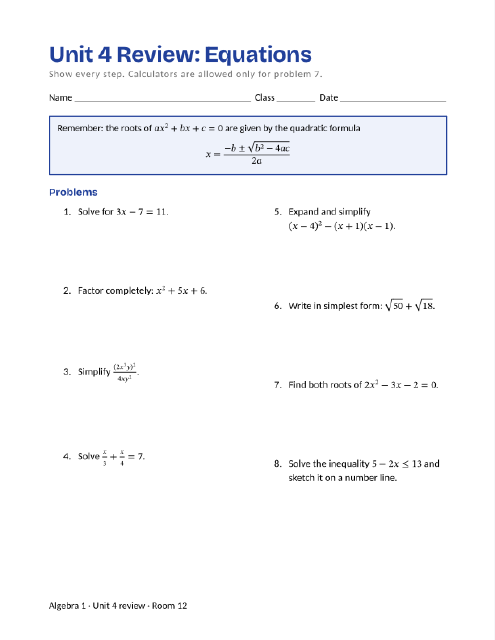
Algebra Practice Worksheet
A printable algebra worksheet — name and date lines, a shaded formula box with the quadratic formula, and eight numbered problems in two columns with inline equations and room to work.
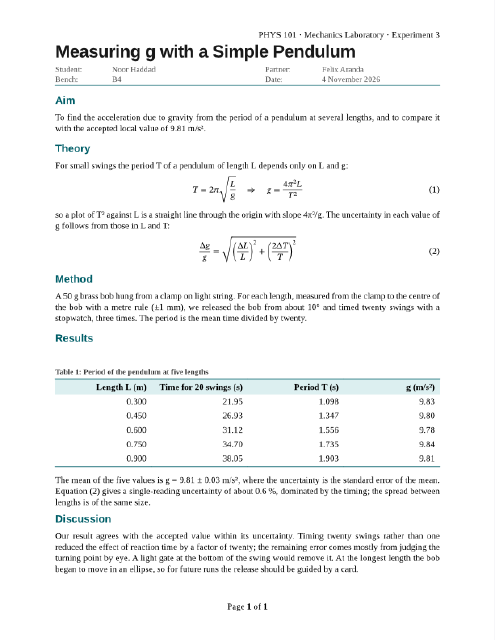
Physics Lab Report
A first-year physics lab report on measuring g with a pendulum — header block, numbered display equations, a captioned data table with a shaded header row and a "Page x of y" footer.
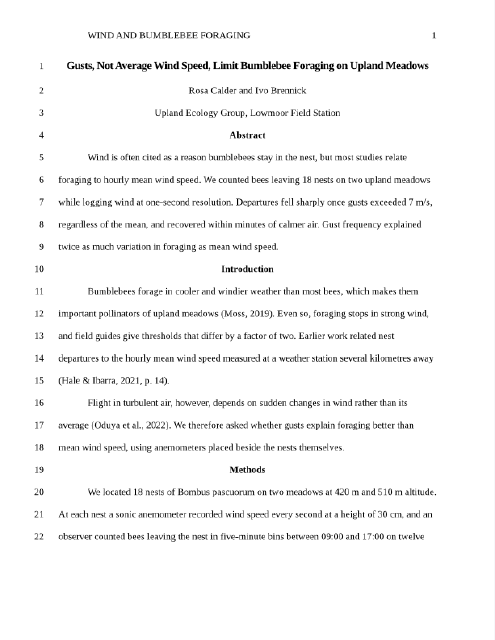
Journal Manuscript for Review
A double-spaced journal submission with continuous line numbers for reviewers, a running head, APA citations from a source list and a generated reference list.
Phonics Poem Card
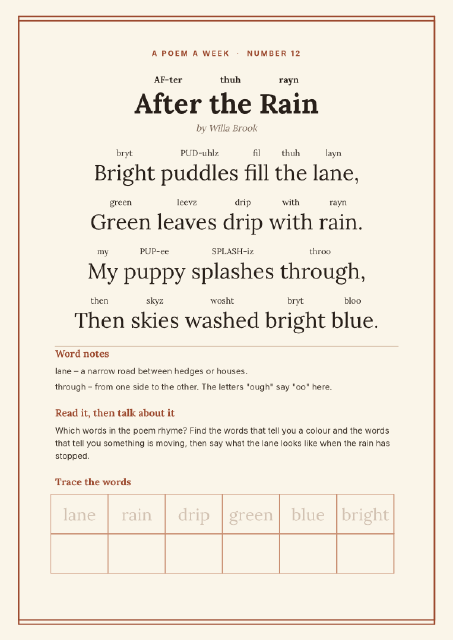
An early-reader poem card with a sound-it-out guide set above every word by Phonetic Guide (EQ) fields, on a tinted page inside a double border.